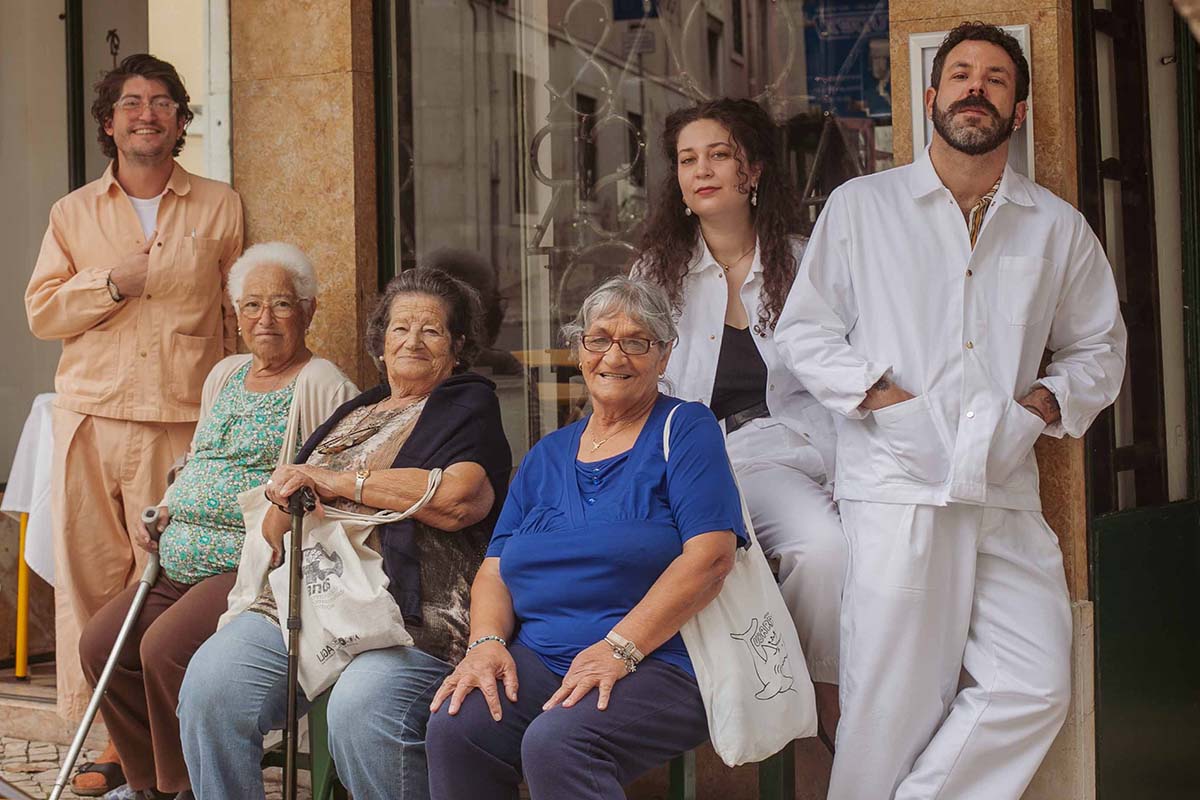
The building at Travessa de São José 1 has been feeding people for over a hundred and fifty years. Not always well, not always in the same way, but the purpose of the room has never really changed: someone walks in, sits down, and something arrives at the table.
It started as a mercearia — a grocery shop — in 1870, when Príncipe Real was residential, quiet, and a long way from anyone's list of the world's coolest neighbourhoods. The counter where we now pour negronis was built for weighing rice and slicing presunto. The tiles — blue, geometric, slightly uneven — were laid by hand in an era when tiling a shop was a mark of civic pride, not interior design.
What came between
Over the next century and a half, the space changed hands and changed purpose, but never changed shape. The room is small — nine square metres of kitchen, twenty seats in the dining room — and the building resists alteration in the way old Lisbon buildings do: stubbornly, with thick walls and low ceilings that make renovation architects weep.
Before O Palmeiral, it was Moya. Before Moya, other things. The details blur as you go further back. What remains consistent is the counter, the tiles, and the feeling — walking in off a Lisbon street into a room that has been worn smooth by use.
Why it matters
There's a municipal programme in Lisbon called Lojas com História — shops with history. It protects commercial spaces that have served the city for generations, recognising that the character of a neighbourhood lives not just in its buildings but in what happens inside them. We're assembling the dossier now. The room qualifies on age alone. We'd like it to qualify on spirit, too.
When we took the keys in 2025, the question was simple: how much do you change? The kitchen needed everything — equipment, extraction, a layout that lets two people cook for forty-one. The room needed almost nothing. New chairs. Better light. White tablecloths in the evening. The tiles stay. The counter stays. The proportions of the room — the thing that makes it feel like someone's front room rather than a restaurant — that stays above all.
The name came from the palm tree at the door. Palmeiral — a grove of palms. There's only one, but in Lisbon, one is enough.
This is the work of custodianship: not to preserve a space in amber, but to keep it useful, keep it fed, keep the door open. The grocery shop closed decades ago. The room didn't close with it. Someone still walks in, sits down, and something arrives at the table.
The tiles have outlasted every tenant. With any luck, they'll outlast us too.