The Room

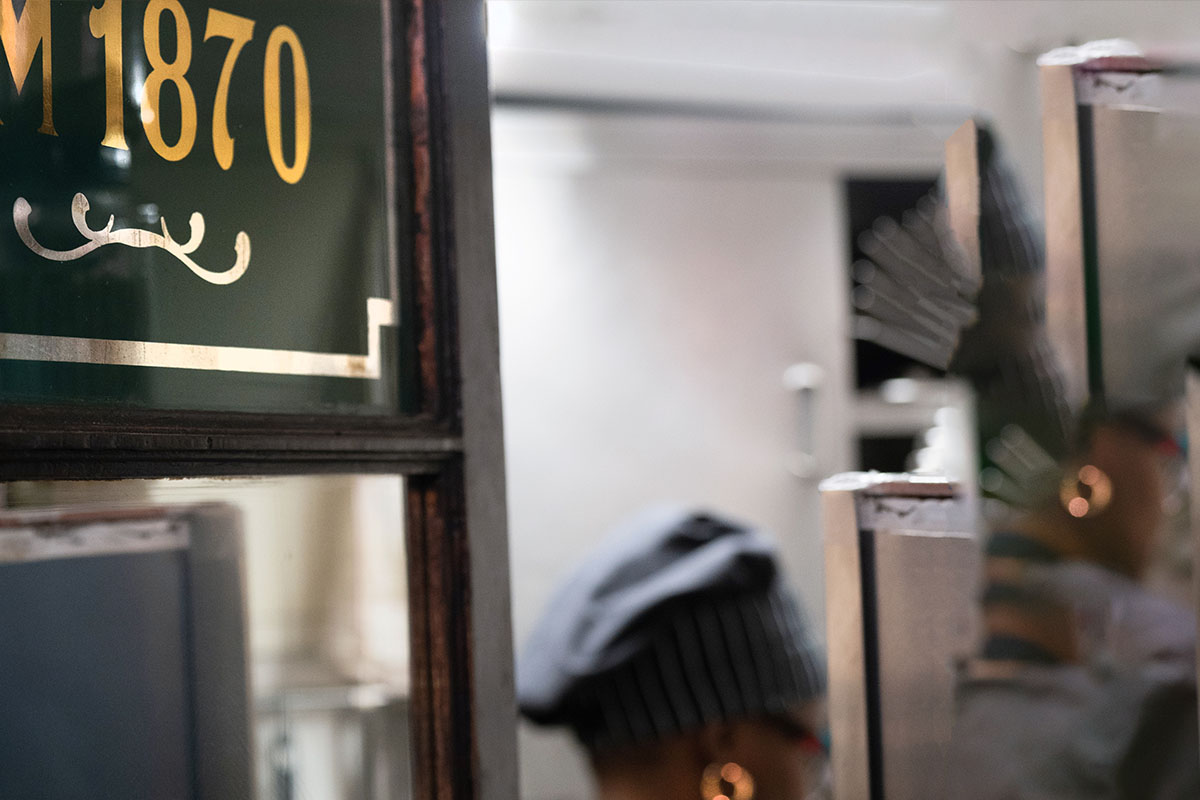
The building at Travessa de São José 1 was a grocery shop in 1870. The tiles, the counter, the proportions — all original. When we took the keys in 2025, we changed the kitchen and left the room alone. New chairs, better light, white tablecloths in the evening. The space didn't need reinventing. It needed someone to cook in it again.

Twenty seats inside, twenty-one on the terrace. Nine square metres of kitchen. It's a small house — deliberately. The dining room has the proportions of someone's front room because, for a hundred and fifty years, that's essentially what it was: a place where people from the neighbourhood walked in, sat down, and something arrived at the table.

Original 19th-century tiles and wooden counter inside O Palmeiral, Príncipe Real, Lisbon
The counter was built for weighing rice. Now it holds negronis.

The Food

The kitchen cooks daily — what the market brings, what the seasons suggest, what the market brings and what the season suggests.

Tortellini in brodo. A pint of prawns with piri-piri. Aubergine parmigiana. Vitello tonnato. Chicken cacciatore. Pork chop. Salt cod with chickpeas — which, Daniel insists, is as Roman as it is Portuguese. The menu is concise and changes often. The wine list is short and honest. The cocktails — Negroni, Martini, Montenegro Sour — are better than they need to be.

In the morning, it's a café: good coffee, pastries, eggs. By lunch, it's a neighbourhood canteen. By dinner, the tablecloths go on and it becomes something else — still informal, still unhurried, but with the quiet seriousness of people who care about what they're putting on the plate.

Dishes at O Palmeiral restaurant — tortellini in brodo, prawns with piri-piri, aubergine parmigiana
Lunch, most days.

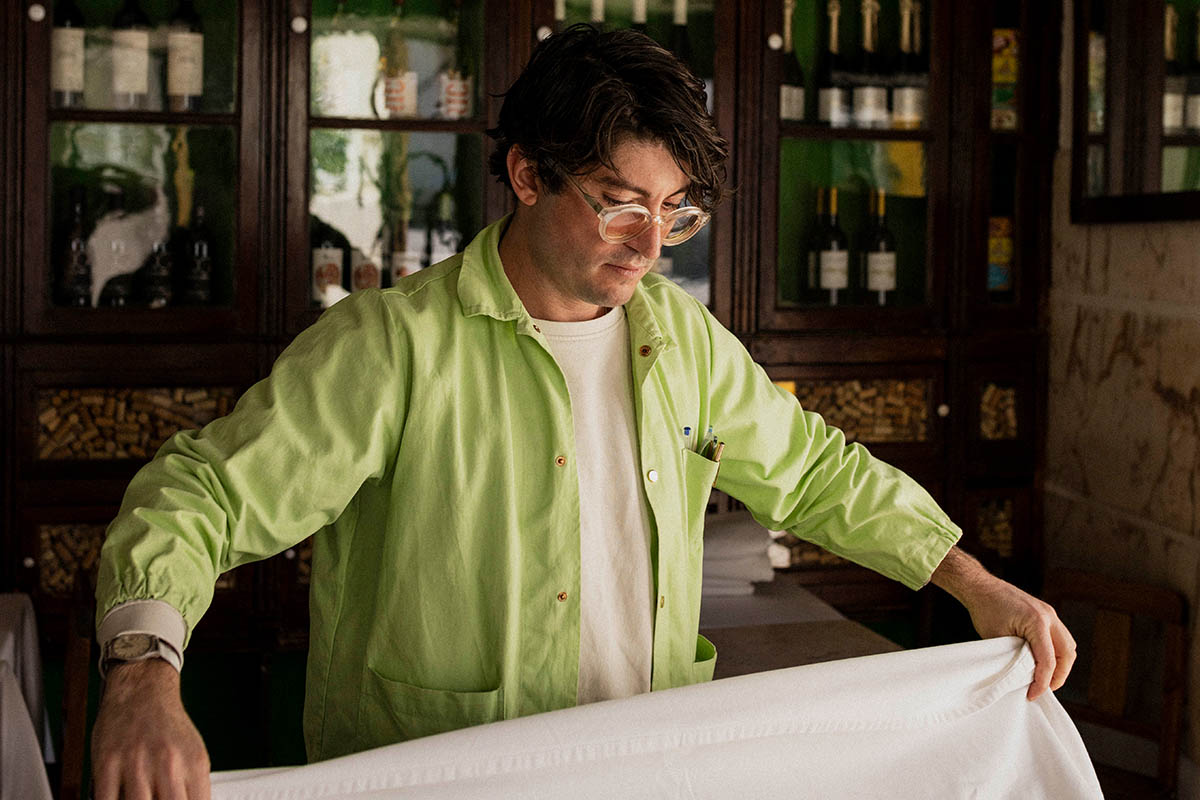
Daniel Bernardi

London-born, Italo-Irish. Grew up between kitchens and comedy clubs. Spent two decades in London producing events, private dinners, and brand activations through TRUE Hospitality — working with luxury brands, galleries, and the kind of clients who care about the details of a room as much as the food in it.

In the early 2000s, he worked as an interpreter at politico-philosophical summits across Europe during the Alternative Globalisation Movement — conferences on identity, place, and belonging. These aren't the obvious credentials for running a restaurant, but they inform everything about how O Palmeiral thinks about its neighbourhood, its city, and the people who walk through the door.

Brexit placed him at a crossroads. Lisbon was already an old acquaintance — a stopover between London's grey and the Algarve's blue. When the space at Travessa de São José became available, it felt less like a business decision and more like a sign. O Palmeiral opened in July 2025. Daniel's wife and daughter followed. The move is now permanent.

Daniel Bernardi, owner and director of O Palmeiral restaurant, at the bar in Príncipe Real, Lisbon
Daniel at the counter. Most evenings.

Amorvero

O Palmeiral is part of Amorvero — a philosophy of culture expressed through legacy hospitality venues. The principle is custodianship, not acquisition. We don't buy venues to rebrand them. We keep them alive — the bar stays where it's always been, the room keeps its shape, and someone opens the door every morning.

Amorvero works with historic spaces that have served their communities for generations, revitalising them through partnership rather than replacement. O Palmeiral is the first. The tiles have outlasted every tenant. With any luck, they'll outlast us too.